
The single biggest reason a STEM gift fails isn’t quality. It’s fit. A kit that’s too easy is finished in an afternoon. One that’s too hard gets abandoned at step four. The age on the box tells you what’s safe. This guide is about what’s right.
The rule of thumb: aim for the middle of a kit’s age range, not the bottom. A “6+” kit is usually perfect for a seven- or eight-year-old, and a stretch for a six-year-old working alone.
Ages 3–5: play first, learning hidden inside
Preschoolers learn through their hands, through repetition and through stories. They can follow a sequence of three or four steps, sort by color and shape, and they love cause and effect.
Look for:
- Big, chunky pieces that small hands can manage, with no fiddly fasteners.
- Screen-free coding toys where kids press arrow buttons and watch a robot follow the plan. This teaches sequencing and debugging long before reading.
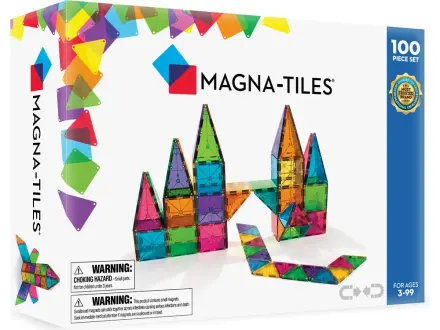
- Open-ended building like magnetic tiles, where there’s no wrong answer.
- Quick wins. Something should happen within the first five minutes.
Avoid: anything that depends on reading instructions, tiny parts (choking hazard under 3), and kits that need an adult for every step.
Browse picks for ages 3–5.
Ages 6–8: the “I did it myself” years
Early readers can now follow picture instructions independently, and they want proof they built something real. This is the sweet spot for first circuits, beginner robots and science kits with visible results, like crystals, volcanoes and light-up projects.
Look for:
- Clear, picture-led instructions and projects that build on each other.
- Snap-together electronics. Snap Circuits-style kits teach real circuit logic with no soldering or loose wires.
- Logic games and puzzles with graded challenge cards, so difficulty grows with them.
- A finished result to show off. It matters more than you’d think.
Avoid: chemistry sets with long waiting periods, and coding kits that require a tablet unless you’re comfortable with that screen time.
Browse picks for ages 6–8.
Ages 9–12: real tools, real projects
Tweens can concentrate for longer, handle multi-step builds, and are ready for programmable robots, bigger circuit sets, proper microscopes and chemistry kits. Many are ready to move from block-based coding toward text-based languages.
Look for:
- Room to grow. The best kits start with guided projects and then open up to the kid’s own ideas.
- Block-to-text coding paths. Robots that start with drag-and-drop blocks and progress to Python or JavaScript.
- Weekend-sized builds. LEGO Technic, mechanical models and marble-run systems reward patience.
Avoid: “toy versions” of real tools that cap out quickly. At this age, kids notice when something is babyish.
Browse picks for ages 9–12.
Teens & young adults: the same tools engineers use
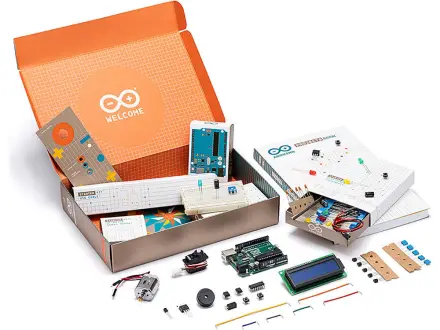
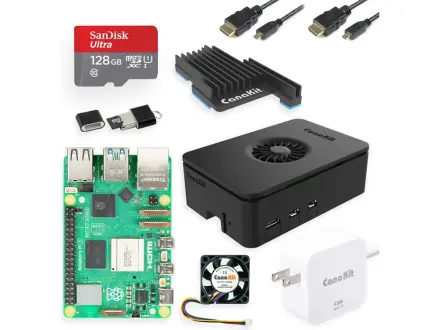
By 13, the best gifts are genuine platforms: Arduino microcontrollers, Raspberry Pi computers, soldering kits, telescopes, and serious build sets. These lead to science-fair projects, portfolio pieces and, sometimes, a future major.
Look for:
- Ecosystems, not one-offs. Arduino and Raspberry Pi have enormous libraries of free projects online.
- Quality tools. A decent soldering iron or telescope is a gift that lasts years.
- A good book alongside the kit. Structured projects help bridge the gap between “it blinks” and “I built this”.
Browse picks for teens & young adults.
Three questions to ask before you buy
- What’s needed that isn’t in the box? Batteries, a tablet, a computer, tools? Every Electroys product page lists these under “Good to know before buying”.
- How much adult help will it need? Be honest about how much time you have on the day.
- What happens after the first build? Challenge cards, expansion sets, online projects and coding all add replay value.
Still unsure? The Kit Finder asks three quick questions and suggests the best matches.